


Next: A..3.2 Upper Limit Server Up: A..3 The XMM-Newton Serendipitous Source Catalogue Previous: A..3 The XMM-Newton Serendipitous Source Catalogue
New XMM-Newton catalogues are created on a regular basis. The latest 5XMM
was released in June 2026. 5XMM contains 2,578,752 detections or upper
limits which relate to 818,656 unique sources drawn from 14,616 XMM-Newton
observations that were public by November 1st 2024 , and covers a unique
sky area of 1,397 square degrees. The median flux in the total photon
energy band of the catalogue (0.2-12.0 keV) is 1.3
 ;
in the soft energy band (0.2 - 2 keV) the median flux is
;
in the soft energy band (0.2 - 2 keV) the median flux is
 ,
and in the hard band (2 - 12 keV) it is
,
and in the hard band (2 - 12 keV) it is
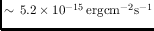 .
About 40% of the sources have total fluxes below
1
.
About 40% of the sources have total fluxes below
1
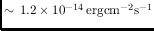 .
.
About 30% of the observations have features that may cause spurious detections (mainly the wings of bright sources and large extended emission), and it is strongly recommended to use a source filter based on the summary flag column.
Spectral energy distributions (SEDs) are provided for each of the unique 5XMM sources after cross-match with 26 archival catalogues selected to cover the largest sky coverage and widest span in wavelength from UV to radio.
A total of 5,203 groups, comprising 14,616 good-quality XMM-Newton observations were collected for source detection after stacking. There are 818,656 unique sources, 411,307 of them multiply observed.
XMM-Newton observers may find the 5XMM catalogue useful in planning new observation proposals, choose homogeneous populations of sources, carry out spectral studies, find sources of similar luminosities, identify sources that vary on the short- and long-term and carry out multi-wavelength studies without the need for cross-correlating sources with multi-wavelength catalogues.
The XMM catalogues are described in the Astronomy & Astrophysics papers Webb et al., 2020, A&A, 641, A136, Traulsen et al., 2020, A&A, 641, A137, Traulsen et al., 2019, A&A, 624, A77(4XMM) and Webb, Traulsen, Coriat et al. 2026, A&A, submitted(5XMM). Previous major revisions of the catalogue are also useful to understand the full content of the catalogue and their associated source product (Rosen, Webb, Watson et al., 2016, A&A, 590, A1 and Watson et al., 2009, A&A, 493, 339).
The catalogue can be retrieved from the XMM-Newton Science Archive web page in FITS or CSV format and is fully accessible through XMM-Newton Science Archive user interface.
Other useful interfaces to the 5XMM catalogue include
| IRAP catalogue server | http://xmm-catalog.irap.omp.eu/ |
| XCATDB: | http://xcatdb.unistra.fr, |
| HEASARC interface: | http://heasarc.gsfc.nasa.gov/W3Browse/xmm-newton/xmmssc.html |
which are particularly useful for exploring correlations with other catalogues.
European Space Agency - XMM-Newton Science Operations Centre